


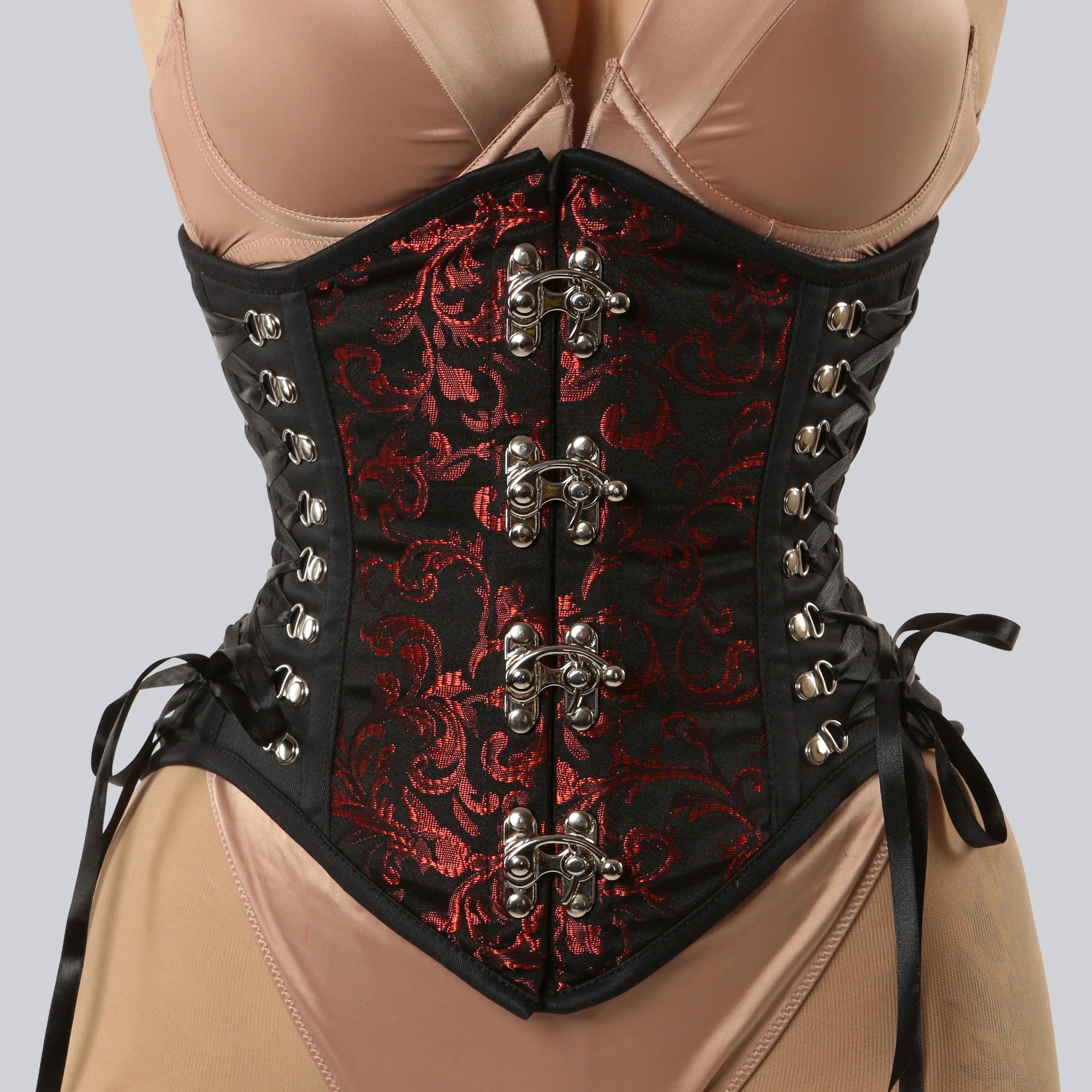


Wearing a corset should make you feel supported, shaped, and confident, not sore, restricted, or frustrated. Yet many people unknowingly wear the wrong corset size, assuming discomfort, bulging, or poor results are just “part of it.”
They’re not.
The truth is, most corset problems don’t come from corsets themselves. They come from incorrect sizing, poor fit, or choosing the wrong style for your body and goals issues professional corset fitters see every day. When a corset fits properly, it should feel firm and structured, but still allow you to breathe comfortably, move normally, and wear it for hours without pain.
This guide will walk you through the most common signs you are wearing the wrong corset size, explain why they matter, and show you exactly what to do if your corset doesn’t fit the way it should.
Quick Checklist – Are You Wearing the Wrong Corset Size?
If you notice several of the signs below, there’s a strong chance your corset size or style is not right for your body:
- It hurts within minutes of putting it on
- You feel sharp pressure, pinching, burning, or numbness
- You struggle to breathe normally, even when it isn’t tightly laced
- Your waist bulges above or below the corset
- The corset shifts, rides up, or wrinkles instead of staying anchored
- It leaves deep, painful marks that linger
- You see little to no waist shaping, even when worn correctly
- You can’t wear it comfortably for more than 30–60 minutes
If several of these signs feel familiar, it may be time to revisit your measurements using a detailed corset sizing guide to make sure your fit and proportions are truly correct.
A properly fitted corset should feel supportive and secure, not punishing.
Why Wearing the Wrong Corset Size Is a Serious Problem

A corset is a structured garment designed to distribute pressure evenly across the torso, support posture, and shape the waist gradually. When the size is wrong, that pressure no longer spreads correctly. Instead, it concentrates in the wrong places which is where most problems begin. If you want a deeper understanding of how corsets interact with the body, this guide on what corsets do to your body explains the effects in more detail.
Over time, wearing the wrong corset size can lead to:
- ongoing discomfort that doesn’t improve with wear
- bruising or nerve irritation from uneven pressure
- restricted breathing due to rib or upper-torso compression
- digestive pressure caused by incorrect waist placement
- reduced posture support and increased lower-back strain
- stalled or ineffective waist training progress
- visible fit problems under clothing, such as bulging or shifting
Beyond comfort, the wrong corset size prevents your corset from doing what it is designed to do: support your body safely, shape the waist evenly, and allow gradual, sustainable results.
Can Wearing the Wrong Corset Size Be Harmful?
Yes, wearing the wrong corset size can be harmful, especially when an incorrect fit is ignored over time.
In the short term, an ill-fitting corset may cause persistent pain, skin irritation, restricted breathing, and pressure on sensitive areas of the body. When these issues continue, the body often begins compensating in unhealthy ways, which can affect posture, circulation, and overall comfort. If you’re wondering whether extended use increases risks, this also connects closely to the question of is it safe to wear corsets every day.
Over the long term, consistently wearing the wrong size can contribute to nerve irritation, rib and hip strain, digestive discomfort, and ongoing musculoskeletal stress. This is why professional corsetry places such strong emphasis on proper measurement, correct structure, and gradual waist reduction rather than aggressive tightening.
-
Expert insight from professional corset fitters:
“Most problems people experience with corsets don’t come from corsets themselves; they come from incorrect sizing, over-tightening, or choosing the wrong style. In professional fittings, the first thing corrected is almost never tightness. It’s structure, measurements, and pressure distribution.”
This distinction is important. A properly fitted corset supports the body. A poorly fitted one forces it.
Stop Wearing Your Corset Immediately If You Notice These Signs

Your body gives very clear signals when something is wrong. If any of the following occur, remove your corset immediately and reassess the fit before continuing:
- sharp, burning, or stabbing pain
- numbness or tingling in the waist, back, or sides
- dizziness or light-headedness
- noticeable difficulty breathing
- severe rib or hip pressure
- bruising, broken skin, or deep painful marks
These sensations are not part of seasoning and should never be ignored.
-
Real-world observation from corset consultations:
“In professional fitting environments, these signs are treated as stop-signals, not adjustments. Clients are advised to remove the corset, rest, and review their measurements and corset structure before wearing again. Ignoring these warnings often leads to long-term discomfort and discouraging waist-training experiences.”
Corsetry is meant to be progressive and supportive. Any sensation that feels alarming is your body’s way of telling you to pause.
Physical Signs You Are Wearing the Wrong Corset Size
Physical sensations are often the first and clearest clue that something isn’t right.
Common physical signs of wearing the wrong corset size include:
- persistent pain that does not ease after loosening or adjusting
- strong rib or hip pressure instead of controlled waist compression
- lower back discomfort rather than improved posture support
- skin irritation, redness, or bruising along boning or edges
- digestive discomfort, pinching, or a heavy feeling at the waist
A well-fitted corset should feel snug and structured, with evenly distributed pressure never sharp, concentrated, or painful.
Visual Signs Your Corset Does Not Fit Properly
Fit problems are often easiest to spot in the mirror.
Watch for these visual signs that your corset may be the wrong size or shape:
- bulging or spillage at the top or bottom edges
- a corset that rides up, twists, or shifts while worn
- extreme, uneven, or hard-to-close lacing gaps
- bent busks, strained seams, or warped fabric
- wrinkling or collapsing around the waist area
- a corset that never settles at your natural waist
A properly sized corset sits at the narrowest part of your torso, stays stable throughout wear, and creates a smooth, balanced silhouette.
Fit & Performance Signs Most People Ignore

Not all wrong-size problems come with sharp pain. Some are subtle and easy to dismiss which is why many people continue wearing the wrong corset far longer than they should.
You may be wearing the wrong corset size if:
- your corset never creates visible waist definition
- it feels loose yet still uncomfortable
- you constantly need to re-lace, shift, or readjust it
- sitting remains difficult or restrictive
- weeks pass with little to no shaping progress
If this sounds familiar, it often leads people to wonder can a corset really make your waist smaller when in reality, the issue is often fit, not the effectiveness of corsets themselves.
These signs often point to poor pressure distribution, incorrect proportions, or a mismatch between your body and the corset’s structure.
-
Common real-world scenario:
“Many people seek help saying their corset ‘doesn’t really hurt, but doesn’t really work.’ In most fittings, this turns out to be a sizing or style issue not a failure of corsets, but a misalignment between torso length, rib structure, or intended use.”
When a corset fits properly, shaping becomes noticeable, comfort improves, and constant adjustments are no longer necessary.
Signs Your Corset Is Too Small vs Too Big
Understanding whether your corset is too small or too big is key to correcting fit problems and avoiding discomfort.
When a Corset Is Too Small
A corset that is too small usually creates intense, concentrated pressure rather than controlled shaping.
Common signs include:
- sharp waist, rib, or hip pain
- bulging above or below the corset edges
- extremely narrow or fully closed lacing gaps
- noticeable breathing difficulty
- strained boning, bending busks, or fabric stress
Too-small corsets force the body instead of shaping it, increasing discomfort and reducing long-term wearability.
When a Corset Is Too Big
A corset that is too big often feels ineffective, unstable, and unsupportive.
Common signs include:
- slipping, riding up, or twisting while worn
- wrinkling or collapsing fabric
- little to no waist definition
- over-tightening to try to create shape
- minimal or no visible results
Oversized corsets fail to anchor at the waist and cannot distribute pressure correctly, which limits both comfort and shaping.
Discomfort vs Wrong Size – How to Tell the Difference

Mild, even pressure is normal when breaking in a new corset. Sharp, worsening pain is not. Many beginners confuse incorrect lacing with incorrect sizing, which is why learning how to lace a corset properly is just as important as choosing the right size.
Normal seasoning sensations usually include:
- light, even pressure around the waist
- mild tightness that gradually eases with wear
- gentle awareness of posture support
- increasing comfort over time
Wrong size warning signs often include:
- pinching, stabbing, or burning pain
- numbness or tingling sensations
- strong rib or upper-torso compression
- noticeable difficulty breathing
- pain that intensifies instead of fading
Seasoning helps a corset adapt to your body. It does not correct incorrect sizing or structure.
Why Your Corset Can Feel Wrong Even If the Size Chart Says It Fits
Size charts are helpful, but they only tell part of the story.
Most charts focus on waist measurement alone. Real corset fitting also considers torso length, rib cage shape, hip spring, posture, and how your body distributes volume above and below the waist. It also means understanding how different types of corsets are designed to sit and shape the body, since structure plays just as big a role as size.
This is why two people with the same waist size can require completely different corsets.
-
Professional fitting perspective:
“In professional corsetry, waist size is only one measurement. Torso length, rib structure, and hip spring are just as important. Experienced fitters never size corsets by waist alone, because structure matters as much as circumference.”
A corset can technically “match” your waist size and still feel wrong if its proportions don’t align with your body. Proper fit depends on structure, not just numbers.
Common Corset Sizing Mistakes Beginners Make
Many fit and comfort problems come from avoidable first-time mistakes that are seen again and again with new corset wearers. These errors often happen when people don’t yet understand how to wear a corset correctly or rush the process.
Common beginner corset sizing mistakes include:
- buying a corset that is too small in an attempt to “speed up” results
- choosing fashion corsets when the goal is waist training
- ignoring torso length and upper- and lower-body proportions
- over-tightening on the very first wear
- wearing a corset for too many hours before the body has adapted
Corsetry works best when sizing is gradual, supportive, and consistent, not rushed.
What a Properly Fitted Corset Should Feel Like

A properly fitted corset should feel supportive, controlled, and comfortable, never painful or restrictive.
A well-fitted corset typically feels:
- firm, but not painful
- evenly supportive across the torso
- comfortable to breathe in
- stable and anchored at the natural waist
- posture-supportive rather than straining
- gradually shaping the waist, not forcing it
You should be able to sit, walk, and wear your corset for extended periods without distress, sharp pressure, or the need for constant adjustment.
What to Do If You’re Wearing the Wrong Corset Size
If your corset shows signs of incorrect sizing, the solution is not to tighten harder. The solution is to reassess.
Start by removing the corset and reviewing your measurements. Re-measure your waist, rib area, and hip area. Consider your torso length. Then ask whether your corset style actually matches your goal whether that’s waist training, daily support, or fashion wear.
-
Expert advice from experienced corset specialists:
“Successful waist shaping almost always begins by correcting fit before increasing tightness. Real progress comes from consistent, well-distributed pressure not forcing the waist smaller.”
Correcting size and structure often resolves discomfort quickly and makes future corset wear more comfortable, effective, and enjoyable.
How to Check Your Corset Size at Home (Quick Fit Test)
You can quickly evaluate whether your corset fits correctly by running through this simple at-home fit test:
- does the corset sit at your natural waist?
- is the lacing gap even and moderate rather than extreme?
- can you breathe comfortably while standing and sitting?
- can you sit without sharp pressure or restriction?
- does the corset stay stable and comfortable for at least 30 minutes?
If one or more of these checks fail, your corset’s size, proportions, or style likely need adjustment.
Final Thoughts
Corsets are meant to support, shape, and empower not create pain or frustration. Most negative corset experiences disappear when sizing, style, and body proportions truly align.
Those who work closely with corsetry understand that lasting waist shaping is built on proper fit, patient seasoning, and ongoing size evaluation not extreme tightening.
When the fit is right, comfort improves. Posture feels natural. And shaping becomes gradual, consistent, and sustainable.
Frequently Asked Questions (FAQS)
Should a corset hurt?
No. A corset should feel firm and supportive, but not painful. Pain, pinching, numbness, or burning sensations usually indicate an incorrect size, poor fit, or uneven pressure.
How tight should a corset be?
A corset should be tight enough to feel supportive and create gentle shaping, but loose enough that you can breathe comfortably, sit, and move without distress.
Can wearing the wrong corset size damage your body?
Over time, yes. Incorrect sizing can create unhealthy pressure points, restrict breathing, irritate nerves, and place strain on the ribs, hips, and lower back.
How do I know if my corset fits properly?
A properly fitted corset sits at your natural waist, applies even pressure, allows comfortable breathing, stays stable without shifting, and creates visible shaping without pain.
Can I waist train with the wrong corset size?
No. Waist training with the wrong size can slow results, cause ongoing discomfort, and increase the risk of problems. Correct sizing is essential before starting or continuing waist training.
How long should I wear a corset each day?
Beginners should start with short sessions of about 30–60 minutes and gradually increase wear time as the body adapts and comfort improves.
Can weight changes affect corset size?
Yes. Weight loss, weight gain, and body recomposition can all change how a corset fits. Re-measuring regularly helps ensure continued comfort and proper support.


